III International Biblical Symposium in Angola
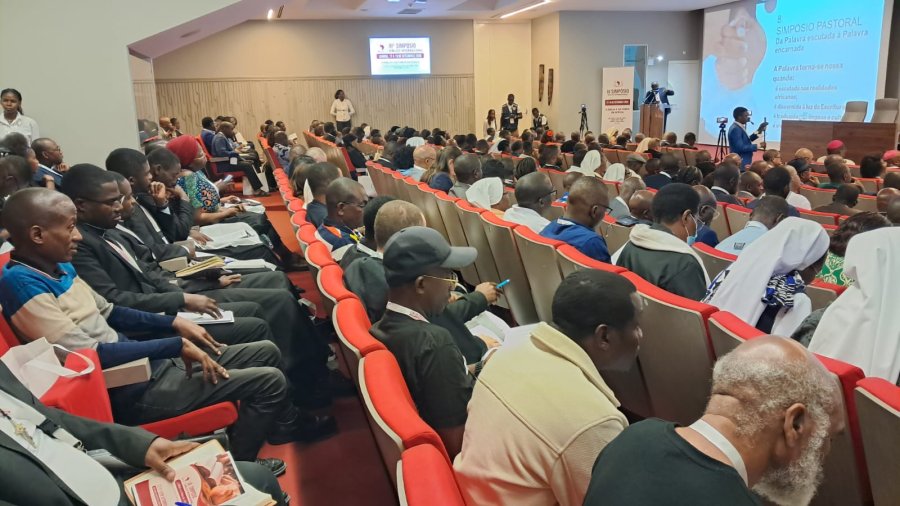
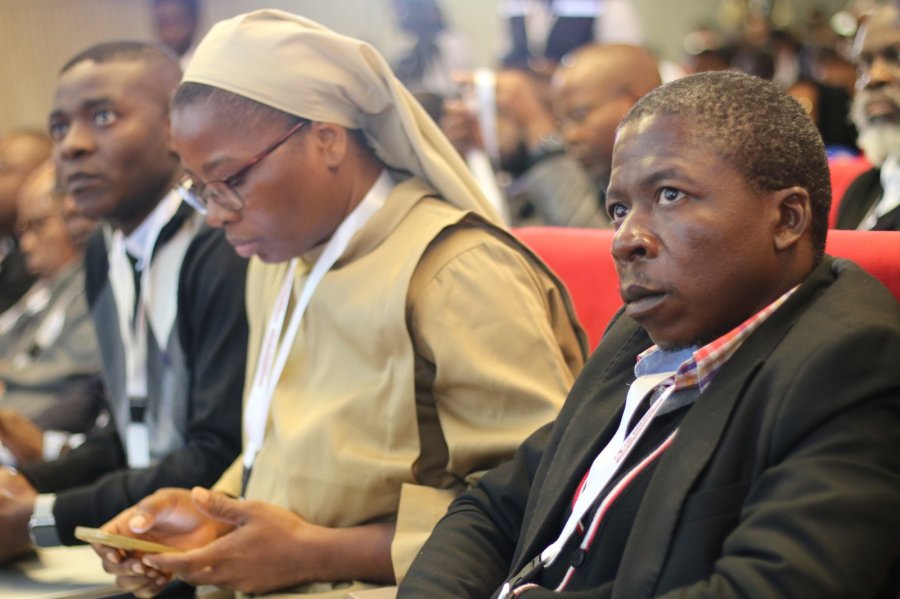
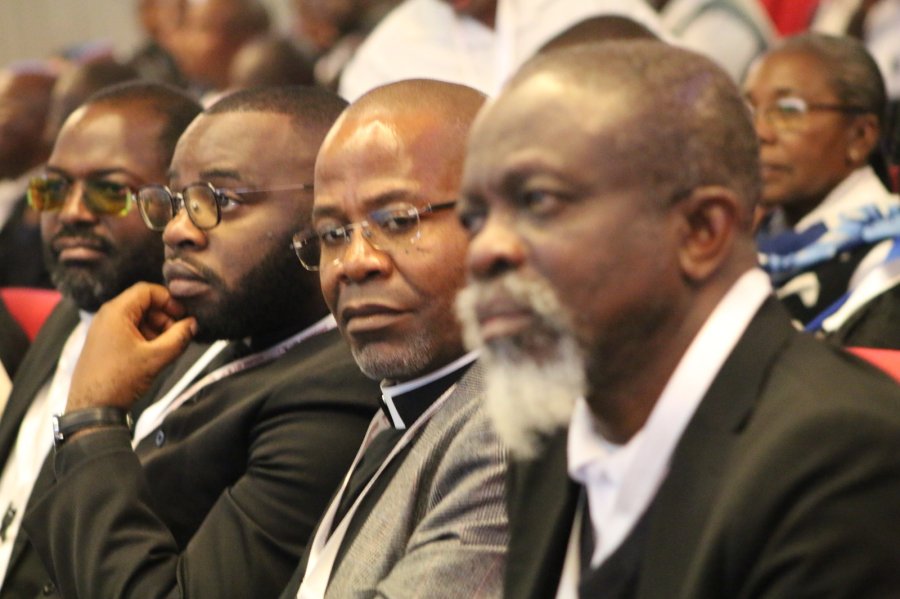
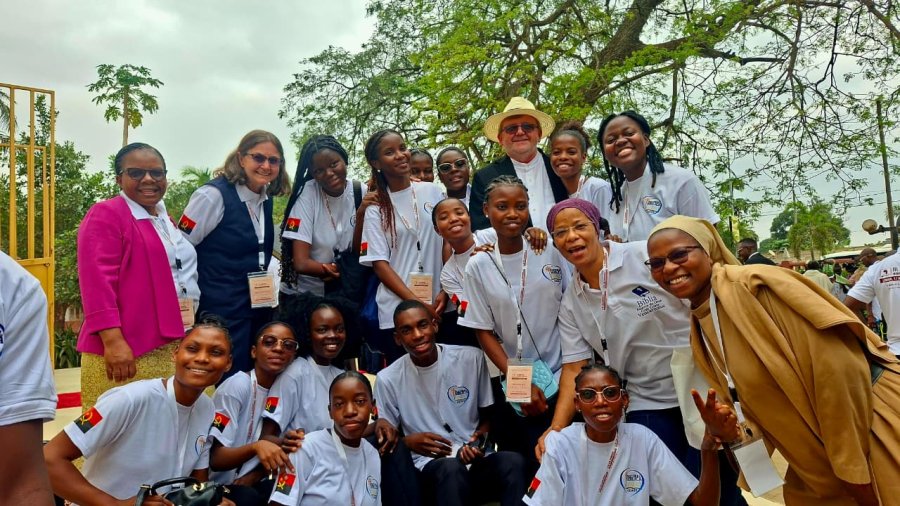
The 3rd International Biblical Symposium on the theme "The Bible and the Hungers of Africa", organised by the Episcopal Commission for Biblical Pastoral Ministry of the Episcopal Conference of Angola and São Tomé (CEAST), took place from 17 to 19 September 2026 in Luanda, at the Extension of the Catholic University of Angola (UCAN), under the motto "I am the bread of life. Whoever comes to me will never be hungry, and whoever believes in me will never be thirsty" (Jn 6:35).
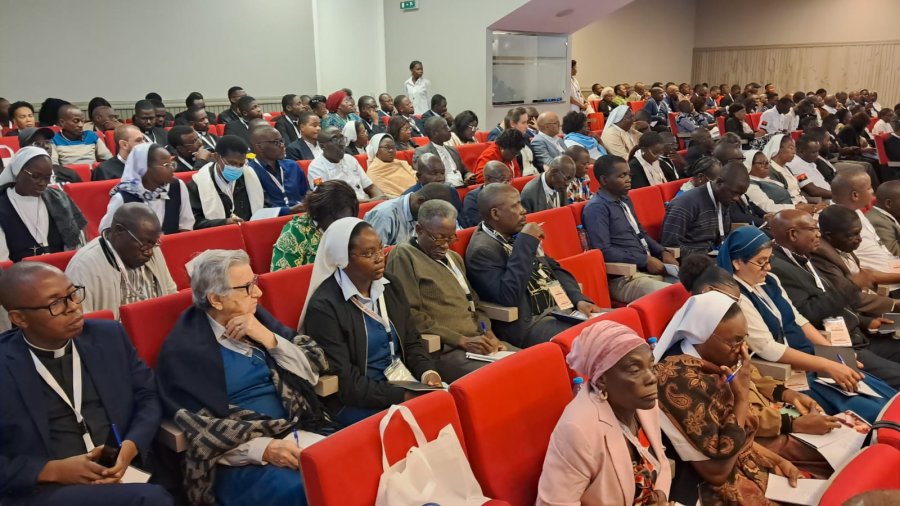
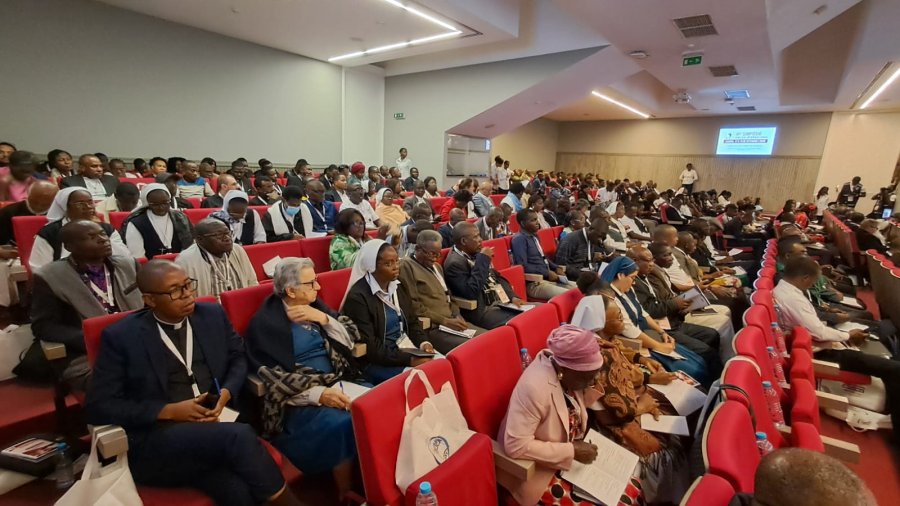
The Symposium brought together biblical scholars, theologians, researchers, pastoral workers and participants from different countries and contexts, with the aim of placing the Word of God in dialogue with the concrete experiences of the African peoples – their hungers, thirsts, wounds, hopes and aspirations.
The first day opened with a solemn session at UCAN, followed by the inaugural lecture "What hunger does Africa have? The Bible before the hungers of the continent", given by Fr Bonifácio Tchimboto, National Director of the Episcopal Commission for Biblical Pastoral Ministry of CEAST.
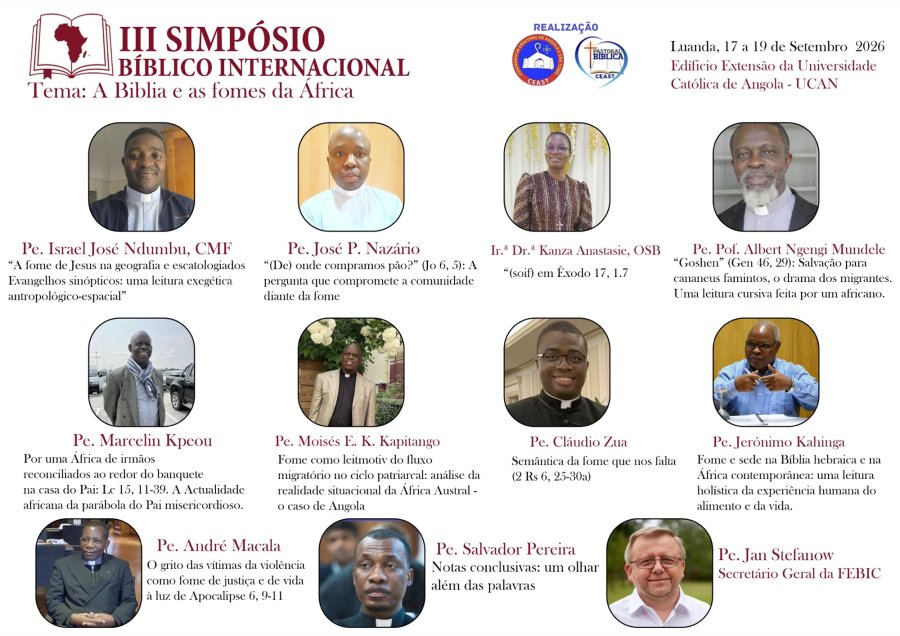
The first panel, Hunger and thirst in the biblical experience, featured Fr Israel José Ndumbu CMF (Pontifical Biblical Institute, Rome), on the hunger of Jesus in the geography and eschatology of the Synoptic Gospels; Fr José P. Nazário (San Dámaso University, Madrid), on Jesus' question "Where are we to buy bread for these people to eat?" (Jn 6:5) as a call to the responsibility of the community; and Sr Dr Kanza Mbaya Anastasie OSB (DR Congo), on thirst in Exodus 17:1-7.
The second panel, Hunger, migration and hospitality in Scripture, brought the biblical narratives closer to today's realities of poverty and displacement. Rev. Prof. Albert Ngengi Mundele (CUEA, Nairobi) offered an African reading of Goshen (Gen 46:29) as salvation for starving migrants; Fr Marcellin Kpeou (Diocese of Rome) presented the parable of the merciful Father (Lk 15:11-32) as a call to an Africa of brothers reconciled around the banquet; and Fr Moisés E. K. Kapitango (Pontifical Biblical Institute, Rome) analysed hunger as the leitmotif of migration in the patriarchal cycle, in the light of the situation of Southern Africa and Angola.
On the second day, the third panel addressed The hungers for justice, dignity and life, with contributions by Fr Cláudio Zua (Archdiocesan Seminary of Luanda) on 2 Kings 6:25-30; Fr Jerónimo Kahinga (Catholic University of Angola) on hunger and thirst in the Hebrew Bible and in contemporary Africa; and Fr André Macala (Good Shepherd Major Seminary, Benguela) on the cry of the victims of violence as a hunger for justice and life in Revelation 6:9-11. A round table on the question "What responses to the hungers of Africa? Bible, Church, society and collective responsibility" gathered biblical scholars, theologians, social scientists, pastoral workers and representatives of civil society. In the afternoon, the participants visited places of historical, cultural and religious interest in Luanda.
Among the international guests was Fr Jan J. Stefanów SVD, General Secretary of the Catholic Biblical Federation, who encouraged the participants to let the fruits of the Symposium reach parishes, Christian communities, seminaries, Bible groups and the media. "Scripture never allows us to choose between hunger of the body and hunger of the soul; it obliges us to take both seriously," he said. Fr Salvador Pereira presented the concluding notes of the Symposium.
In their final statement, "From the Word heard to commitment to life", the participants recognise that the hungers of Africa are not limited to the lack of food, but are also present in social relations, in the structures of justice, in political life and in the spiritual aspirations of the peoples. They reaffirm the need for an African, contextual reading of the Bible, and commit themselves to strengthening biblical research and formation, deepening the relationship between the Bible and justice, promoting hospitality and solidarity towards migrants, the poor and the displaced, fostering reconciliation and peace, and turning the Word heard into the Word lived.
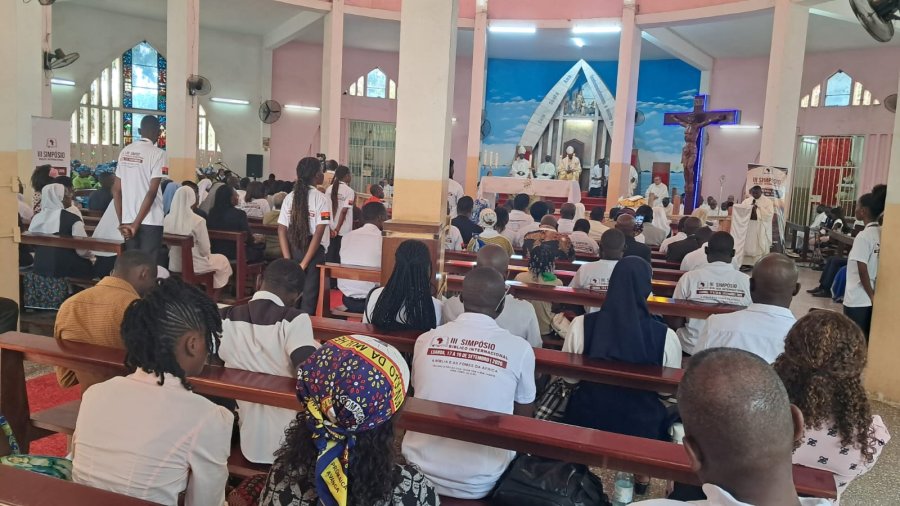
The Symposium concluded on Saturday 19 September with a Eucharistic celebration of thanksgiving in the Cathedral of Caxito, presided over by Bishop Estanislau, Vice-President of CEAST, in which the participants were sent forth to bear witness to Christ, the Bread of Life, before the many hungers of humanity. The participants expressed their gratitude to CEAST, to the United States Conference of Catholic Bishops for its support, to the Catholic University of Angola for its hospitality, and to the Diocese of Caxito and its Bishop for their fraternal welcome.
Sources: Programme and Final Statement of the III International Biblical Symposium; ACI Africa
III International Biblical Symposium - Final Statement

From the Word heard to commitment to life
We, the participants in the III International Biblical Symposium, gathered in Luanda from 17 to 19 September 2026 at the Extension of the Catholic University of Angola (UCAN), under the theme "The Bible and the Hungers of Africa" and enlightened by the motto of Jn 6:35, give thanks to God for this encounter of biblical, academic, ecclesial and cultural reflection.
We recognise that the hungers of Africa are not limited to the lack of food:
-
the hunger for bread and water;
-
the hunger for justice and dignity;
-
the hunger for peace, belonging and hospitality;
-
the hunger for meaning, hope and life;
-
the hunger for reconciliation and peace.
We reaffirm the importance of an African reading of the Bible, understood as a true dialogue between the Word of God and the historical, cultural, linguistic and spiritual experience of the African peoples. We do not simply want to speak about Africa from the Bible. We want to let Africa speak with the Bible and the Bible speak with Africa.
Inspired by Jesus Christ, the Bread of Life, we want to continue the journey: from hunger to sharing; from migration to hospitality; from violence to justice; from exclusion to dignity; from division to reconciliation; from partisanship to citizenship; from despair to hope (...)